
Introduction
Crypto tax in India has become one of the most discussed topics among digital asset investors since the government introduced comprehensive taxation rules in 2022. With India’s growing cryptocurrency adoption, understanding crypto tax in India is crucial for every investor, trader, and digital asset enthusiast. The Indian government has established strict guidelines that include a flat 30% tax rate on cryptocurrency gains, mandatory TDS deductions, and specific rules that affect how you report and pay taxes on your digital asset transactions.
This comprehensive guide will help you understand everything about crypto tax in India, from basic taxation principles to complex scenarios involving TDS, setoff limitations, and filing requirements. Whether you’re a beginner or an experienced crypto trader, this article provides practical insights to ensure compliance with Indian tax laws while optimizing your cryptocurrency investments.
Understanding Cryptocurrency Taxation Framework in India
What Qualifies as Taxable Crypto Income?
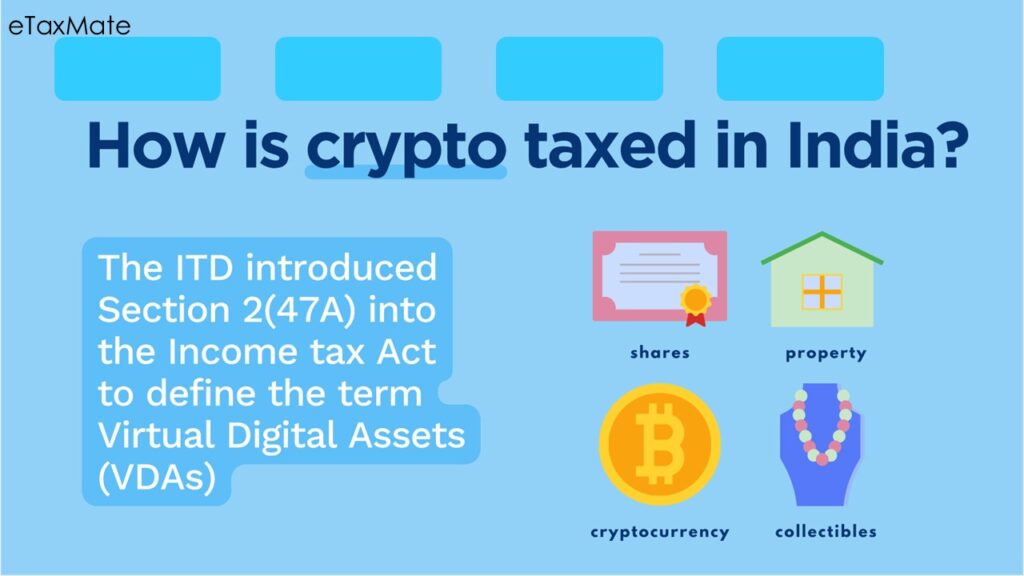
In India, the Income Tax Act treats cryptocurrencies as Virtual Digital Assets (VDAs) under Section 115BBH. Crypto tax in India applies to various scenarios including:
- Trading cryptocurrencies for Indian Rupees (INR)
- Exchanging one cryptocurrency for another (crypto-to-crypto transactions)
- Selling digital assets including NFTs
- Using crypto for purchases or payments
- Mining cryptocurrency as a business activity
The tax framework ensures that any profit derived from cryptocurrency transactions is subject to taxation, making it essential to understand when and how crypto tax in India applies to your activities.
Crypto Tax Rates in India: The 30% Flat Rate System
Primary Tax Rate Structure
Crypto tax in India follows a unique flat rate system that differs significantly from traditional capital gains taxation:
- 30% flat tax rate on all cryptocurrency profits
- No holding period differentiation (unlike stocks where long-term vs short-term matters)
- Additional surcharge and cess applicable based on income levels
- Effective tax rate can reach up to 42.74% for high-income earners
Tax Deducted at Source (TDS) on Cryptocurrency Transactions
Section 194S: TDS Framework
Crypto tax in India includes mandatory TDS provisions under Section 194S, which requires:
- 1% TDS rate on cryptocurrency transactions
- Deduction on gross sale value, not on profits
- Threshold limits that determine TDS applicability
TDS Threshold Limits and Examples
For Specified Persons (Individuals/HUFs):
- ₹50,000 annual threshold – TDS applicable if total crypto transactions exceed this amount in a financial year
For Other Categories:
- ₹10,000 threshold – TDS applicable for entities other than individuals and HUFs
Practical TDS Examples
Example 1: Individual Crypto Trader
- Ram sells Bitcoin worth ₹2,00,000 in FY 2024-25
- Since it exceeds ₹50,000 threshold, TDS of ₹2,000 (1%) is deducted
- Crypto tax in India requires the exchange or buyer to deduct this TDS
Example 2: Below Threshold Transaction
- Priya sells cryptocurrency worth ₹45,000 in the entire financial year
- No TDS deduction required as it’s below ₹50,000 threshold
- However, profit is still subject to 30% tax in ITR filing
Who Deducts TDS?
TDS deduction responsibility varies by transaction type:
- Indian Crypto Exchanges: Automatically deduct TDS on qualifying transactions
- P2P Transactions: Buyer is responsible for TDS deduction
- International Platforms: Indian users must ensure compliance and pay TDS
- Crypto-to-Crypto Trades: Both parties may need to deduct TDS depending on circumstances
Setoff and Carryforward Rules: The Harsh Reality
No Loss Setoff Provision
One of the most restrictive aspects of crypto tax in India is the prohibition on loss setoff:
- Cannot offset crypto losses against crypto gains
- Cannot setoff against other income categories
- No intra-head setoff within cryptocurrency transactions
- Each profitable transaction taxed independently at 30%
Practical Impact of No Setoff Rules
Example Scenario:
- Transaction 1: ₹50,000 profit on Bitcoin sale
- Transaction 2: ₹30,000 loss on Ethereum sale
- Tax Calculation: Pay 30% tax on ₹50,000 profit = ₹15,000
- Loss Treatment: ₹30,000 loss cannot reduce taxable income
No Carryforward of Losses
Crypto tax in India rules strictly prohibit:
- Carrying forward losses to subsequent financial years
- Setting off past losses against future gains
- Any relief mechanism for cryptocurrency losses
This makes cryptocurrency taxation in India among the strictest globally, requiring careful planning and strategic timing of transactions.
Filing Income Tax Returns with Crypto Income
Choosing the Right ITR Form
Crypto tax in India filing requires selecting appropriate ITR forms:
ITR-2 (For Capital Gains Treatment):
- Use when treating crypto gains as capital gains
- Suitable for investors and occasional traders
- Report gains in “Income from Capital Gains” section
ITR-3 (For Business Income Treatment):
- Use when crypto trading is your business activity
- For frequent traders and mining operations
- Report income under “Profits and Gains from Business or Profession”
Step-by-Step Filing Process
- Calculate Total Gains: Sum up all profitable cryptocurrency transactions
- Account for TDS: Include TDS certificates (Form 26AS)
- Prepare Documentation: Maintain detailed transaction records
- Choose ITR Form: Select ITR-2 or ITR-3 based on activity nature
- Report Income: Enter crypto gains in appropriate schedule
- Pay Balance Tax: Pay remaining tax after adjusting TDS
- File Return: Submit ITR before due date
Required Documentation
For proper crypto tax in India compliance, maintain:
- Exchange statements showing all transactions
- TDS certificates from exchanges or counterparties
- Bank statements reflecting crypto-related transfers
- Cost basis calculations for each transaction
- Profit/loss statements with detailed computations
Tax Exemptions and Non-Taxable Crypto Activities
Activities Not Subject to Crypto Tax
Crypto tax in India doesn’t apply to:
- HODLing cryptocurrency – Simply holding without selling
- Wallet-to-wallet transfers between your own addresses
- Receiving gifts from close relatives – Parents, siblings, spouse
- Gifts under ₹50,000 from friends and relatives (non-relatives)
Crypto Gifting Tax Rules
Receiving Crypto Gifts:
- From relatives: Completely tax-free regardless of amount
- From non-relatives: Tax-free up to ₹50,000 per financial year
- Above ₹50,000: Taxable at normal income tax slab rates
Giving Crypto Gifts:
- Disposal event for the giver
- 30% tax applicable on any gains from the gifted crypto
- Fair market value determines gain calculation
Industry Examples and Case Studies
Case Study 1: Day Trader
Profile: Raj, a software engineer who trades cryptocurrencies daily
- Annual crypto gains: ₹5,00,000
- TDS deducted: ₹15,000 (1% of ₹15,00,000 total transactions)
- Tax liability: ₹1,56,000 (30% + cess on gains)
- ITR Form: ITR-3 (business income treatment)
Case Study 2: Long-term Investor
Profile: Sunita, who bought Bitcoin in 2020 and sold in 2024
- Investment: ₹2,00,000 in 2020
- Sale proceeds: ₹8,00,000 in 2024
- Gain: ₹6,00,000
- TDS: ₹8,000 (1% on sale value)
- Tax liability: ₹1,87,200 (30% + cess on gains)
- ITR Form: ITR-2 (capital gains treatment)
Compliance Best Practices for Crypto Tax
Record Keeping Requirements
Effective crypto tax in India compliance requires:
- Detailed transaction logs with timestamps
- Cost basis tracking for all purchases
- Fair market value documentation at transaction dates
- TDS certificates and statements
- Exchange confirmations and receipts
Tax Planning Strategies
While crypto tax in India rules are restrictive, consider:
- Timing transactions to optimize tax liability across financial years
- Gift planning using exemption limits
- Business structure evaluation for regular traders
- Documentation maintenance for audit preparedness
Common Compliance Mistakes to Avoid
- Underreporting gains – All profits must be declared
- Ignoring TDS certificates – Include all TDS in ITR filing
- Mixing business and capital gains – Maintain consistency in treatment
- Poor record keeping – Maintain comprehensive transaction history
Recent Developments and Future Outlook
Government Stance and Regulatory Updates
The Indian government continues to refine crypto tax in India regulations:
- Regular clarifications through income tax department circulars
- Enhanced monitoring of cryptocurrency transactions
- Increased scrutiny through data analytics
- Potential future modifications based on industry feedback
Impact on Crypto Adoption
Strict crypto tax in India rules have led to:
- Reduced speculative trading due to high tax rates
- Increased focus on long-term holding strategies
- Enhanced compliance awareness among investors
- Development of tax-focused crypto tools and services
Conclusion
Understanding crypto tax in India is essential for anyone involved in cryptocurrency transactions. The 30% flat tax rate, combined with 1% TDS and restrictions on loss setoff, creates a unique taxation environment that requires careful planning and meticulous compliance.
Key takeaways for crypto tax in India include:
- All cryptocurrency profits are taxed at 30% regardless of holding period
- TDS of 1% applies to transactions exceeding specified thresholds
- Losses cannot be set off against gains or carried forward
- Proper documentation and timely ITR filing are crucial for compliance
As crypto tax in India regulations continue evolving, staying informed about changes and maintaining detailed records will ensure you remain compliant while maximizing your digital asset investment potential. Whether you’re a casual investor or active trader, understanding these rules helps you make informed decisions about your cryptocurrency activities in India.
Remember that crypto tax in India compliance is not optional – it’s a legal requirement that affects every cryptocurrency transaction you make. By following the guidelines outlined in this comprehensive guide, you can navigate the complex world of cryptocurrency taxation while building your digital asset portfolio responsibly.
📩 Need expert advice?
We’re here to help. You can reach out to us directly at
📱Contact: +91 7389176127
📧Email: help@etaxmate.in
🌐 Website: www.etaxmate.in